A Brighter View
Of the stars in Castle Hill
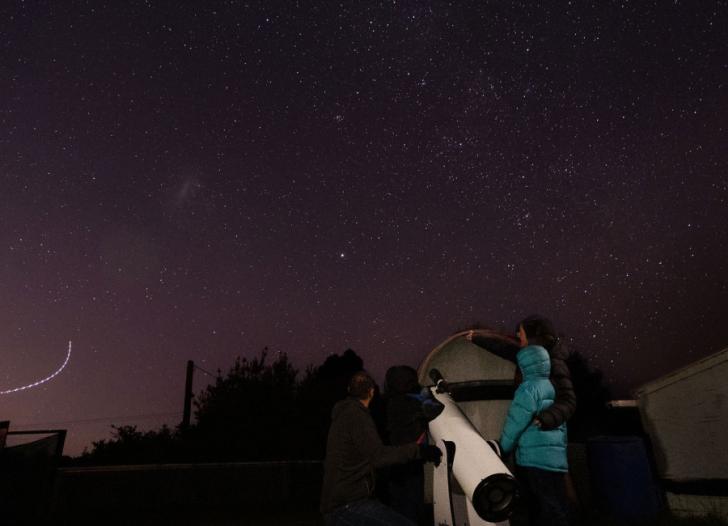
Over the past two years, Selwyn District Council has been exploring Dark Sky accreditation alongside residents, tourism operators, community groups, and partners. The project focuses on four proposed Dark Sky Parks across Department of Conservation land, covering more than 190,000 hectares of alpine landscape.
What has stood out throughout the process has been the strong level of local passion and community ownership. Communities like Castle Hill and Arthur’s Pass have strongly supported the project, recognising the importance of reducing light pollution while protecting the natural character of the area.
Council agreed to provide the necessary upgrades to the existing streetlights at Castle Hill through the Long-Term Plan 2024–2034 process. This decision was based on submissions from Castle Hill and Arthur’s Pass community members.
Technology company Felicity Smart Infrastructure NZ is supplying the system, which will allow around 70 streetlights throughout the village to be remotely managed by Council. The technology will make it possible to adjust lighting levels, dim lights at different times of the night, and trial different approaches that better balance safety, energy efficiency, and protection of the night sky.
An AI sensor will also be trialled to automatically increase or reduce lighting depending on how streets and public areas are being used. The technology can also monitor power use and faults in real time, allowing more efficient use and better maintenance of the LED street lighting while reducing electricity use and power costs.
An innovative system to turn down the lights could bring a significant tourism boost to the Selwyn high country.
It is estimated that Dark Sky accreditation could bring up to $13.5 million a year in visitor spending to the high country, says Council Executive Director Community Services and Facilities Denise Kidd. However, accreditation requires a lighting plan that limits overnight light to maximise views of the stars.
“This is a huge opportunity to make the most of our stunning high-country landscape and its amazing view of the stars. Dark skies are a growing attraction. It’s exciting to see how the trial goes, with the potential for this technology to help with dark sky accreditation and energy savings that could reduce costs in other parts of the district over time,” Mrs Kidd says.
Conversations are also underway with agencies including KiwiRail, Orion and Waka Kotahi about opportunities to improve lighting across parts of the corridor over time.
For Selwyn, the project is about more than tourism.
It’s about recognising the value of our natural environment, strengthening community pride, and creating experiences that encourage people to slow down, connect with nature, and experience the district in a different way. It also reflects a wider shift toward sustainable, low-impact visitor experiences, something increasingly important for both communities and travellers alike.
Applications for the four Dark Sky Parks are expected to be submitted in June 2026, marking a significant milestone in the journey so far.