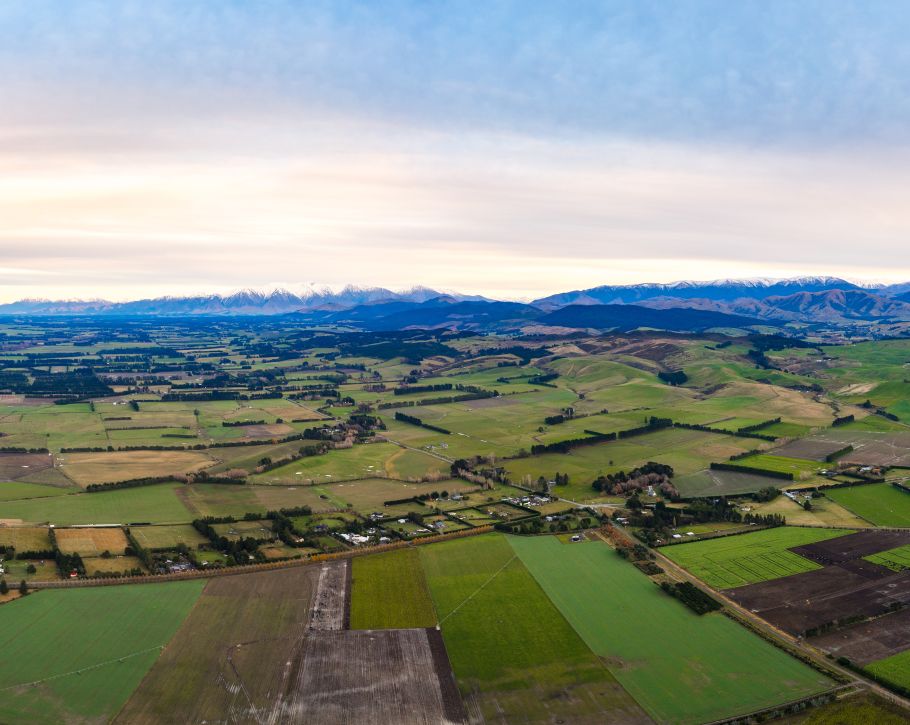
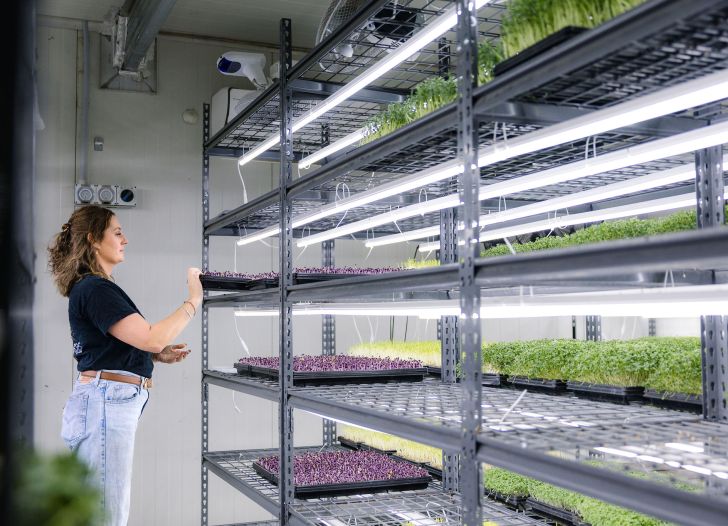
Selwyn’s food and fibre sector is one of the district’s greatest strengths, contributing to nearly half of our local economy and supporting thousands of jobs across farming, processing, research and agribusiness.
At the Knowledge Symposium: From Innovation to Impact, farmers, scientists, entrepreneurs and industry leaders came together at Lincoln University to explore what comes next for the sector and how Selwyn can stay ahead as global expectations shift.
The conversation was clear. The future of food and fibre is already taking shape here.
From Innovation to Impact
About
On Tuesday 31 March, Lincoln University, in partnership with Selwyn District Council, hosted a one-day symposium exploring the future of food, fibre and agri-tech at the Waimarie Building on campus. You can view the full agenda click here
Food and fibre sit at the heart of Selwyn’s economy, and the symposium brought together researchers, producers, technology innovators and industry leaders to reflect on how the sector is responding to a period of significant change. Discussions explored the impacts of climate pressures, evolving environmental expectations, market volatility and shifting consumer demand, alongside the opportunities created by advances in agri-tech, biotechnology, low-emissions solutions and alternative land-use systems.
Keynote speakers shared insights into emerging global trends shaping future food systems, while regional farming and food entrepreneurs highlighted how innovation is already being applied across Selwyn. Together, these perspectives reinforced the importance of turning research and technology into practical, profitable and sustainable outcomes for local businesses.
An interactive workshop session created space for cross-sector discussion and collaboration, helping identify shared priorities and opportunities for action across the district.
Read below to see how Selwyn's food and fibre sector is ready for what's next.
From farm gate to global market: Selwyn's food and fibre sector is ready for what's next
Selwyn's food and fibre sector underpins nearly half the district's economy—but the way it creates value is changing fast. On March 31, about 90 farmers, scientists, entrepreneurs and industry leaders gathered at Lincoln University for the Knowledge Symposium: From Innovation to Impact—Shaping Selwyn's Food & Fibre Future. The question on the table: where is the sector headed, and is Selwyn ready?
More than a primary industry
Before the day's speakers got into solutions, Lincoln University's Wim de Koning set the scene with some startling statistics. Food and fibre accounts for 22% of Selwyn businesses and 22% of its workforce. Add in processing and indirect activity, and the sector is tied to about 41% of the district's GDP.
Those figures come from Agribusiness and Economics Research Unit (AERU) research commissioned by Selwyn District Council and led by Professor Alan Renwick, and show that when food and fibre perform well, Selwyn does too.
The research suggests that technology-led future scenarios tend to deliver the strongest outcomes—but may outstrip the district's current workforce.
Will Selwyn have the people needed to run these advanced farming and processing systems? That’s an open question, de Koning says.
Trust is the new currency
If the morning sessions had a common theme, it was this: competing on volume alone is no longer viable for Selwyn’s producers.
Jolon Dyer, speaking on behalf of the Bioeconomy Science Institute, framed the opportunity at a global scale. The world’s population is projected to grow about 25% by 2050, but food demand itself is expected to more than double.
There’s an opportunity for New Zealand to produce more, but the real prize is producing better. Gaining access to premium markets increasingly comes down to trust: not just food safety, but provenance, environmental impact and supply chain transparency.
“If you can't trace food right back to where it was produced in a very detailed way,” Dyer told the room, “you're probably not going to be able to trade it at all—particularly in premium markets."
"Trust is the product that we're selling."
Beyond commodities
The shift away from commodity-thinking is playing out across the industry. High Peak Station farmer Hamish Guild described their deliberate move away from commodity dependence towards higher-value, story-driven products.
Tourism now accounts for more than half of the station’s income, he says, while honey and wool are being repositioned for niche export markets.
The strategy is simple: sell something distinctive, or risk being undercut.
“If we rely on commodities, we’ll get eaten up,” he said. "We have to brand and add value—that's the only way."
That instinct—brand, add value, or get left behind—echoes across the value chain. Phil Caunter has spent 23 years turning Melton Estate—12 acres of vines, a restaurant and events venue—into one of Selwyn's most recognisable hospitality businesses.
The secret, he says, isn't in the product. It's in the occasion. Summer Love Sparkling, Melton Estate's riesling-pinot blend, he says, is built on the insight that people buy experiences, not grape varieties.
"It's not just about the product,” says Caunter. “It's how people enjoy it, how they take it to their party, their celebration.”
"We're not selling wine. We're selling good times."
Agritech in action
The afternoon turned to the tools already changing the game.
Ruth Leary heads Strategy and Engagement at AgriZeroNZ—a public-private joint venture investing in tools to cut biogenic methane on Kiwi farms.
With enteric methane alone accounting for nearly 40% of New Zealand's total gross emissions, the opportunity is significant. One product close to market: a slow-release bolus developed by Ruminant Biotech, using the active ingredient from asparagopsis seaweed.
With AgriZero’s support, a roll out is planned for later this year.
"We are not trying to pick one winner," Leary says. "We want at least two, three, four things that reach the market and are effective to use on Kiwi farms."
A different kind of challenge occupied the afternoon's second speaker, one farmers have wrestled with for generations: how do you weigh a paddock full of animals that have no interest in being weighed?
Genesmith AI's Ian Harris is working on it—training camera systems to predict livestock weight change from visual body landmarks alone. If it works, farmers could track flock weight change without a single muster—using cameras already running on solar and Starlink in remote paddocks.
It's a problem that's never been solved at scale, but Harris thinks he might be close.
The final session took a different angle altogether. RespondBio uses nitrogen-fixing bacteria and mycorrhizal fungi to rebuild soil biology, cutting synthetic inputs while lifting productivity.
The idea is straightforward: rebuild the biological networks in soil that synthetic fertiliser has replaced, and let nature do the work. Trial results in Selwyn back it up—plots treated with live biology showed dramatically higher soil DNA reads, with grazing frequency doubling on some paddocks.
"By being able to look at obstacles as stepping stones," says founder Dugald Hamilton, "we've been able to come up with better solutions for some greater outcomes for farming.”
The future in motion
The symposium's clearest message wasn't that change is coming—it's already here.
Selwyn's farmers and businesses are experimenting, adapting and building new models in real time. The work now is scaling those ideas and making sure the district has the skills to keep pace.