Selwyn Business Briefing: Straight Talk on the Global Oil Shock
29 April 2026
29 April 2026
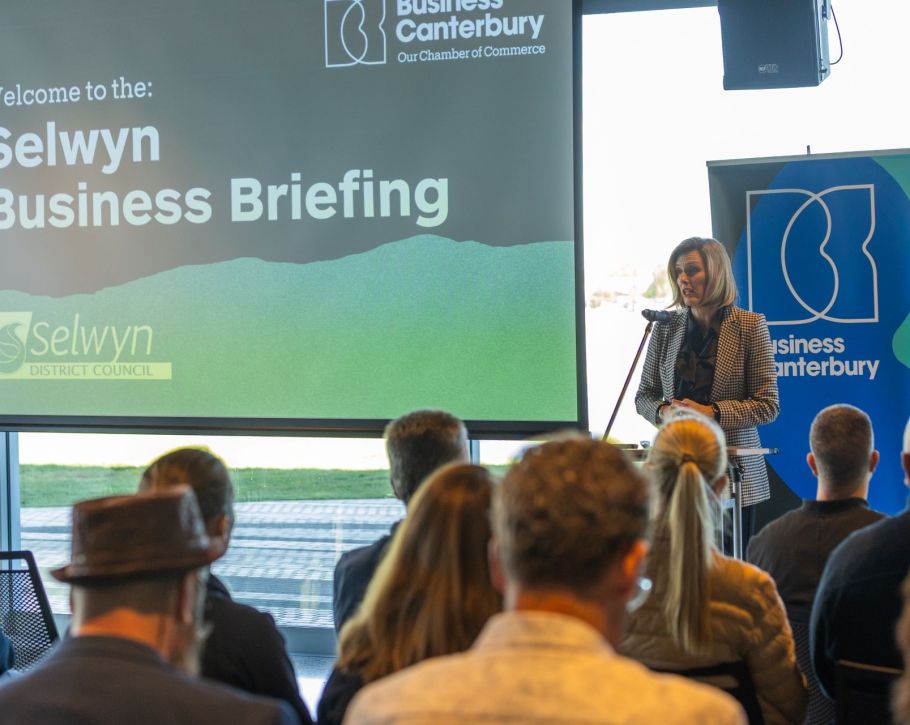
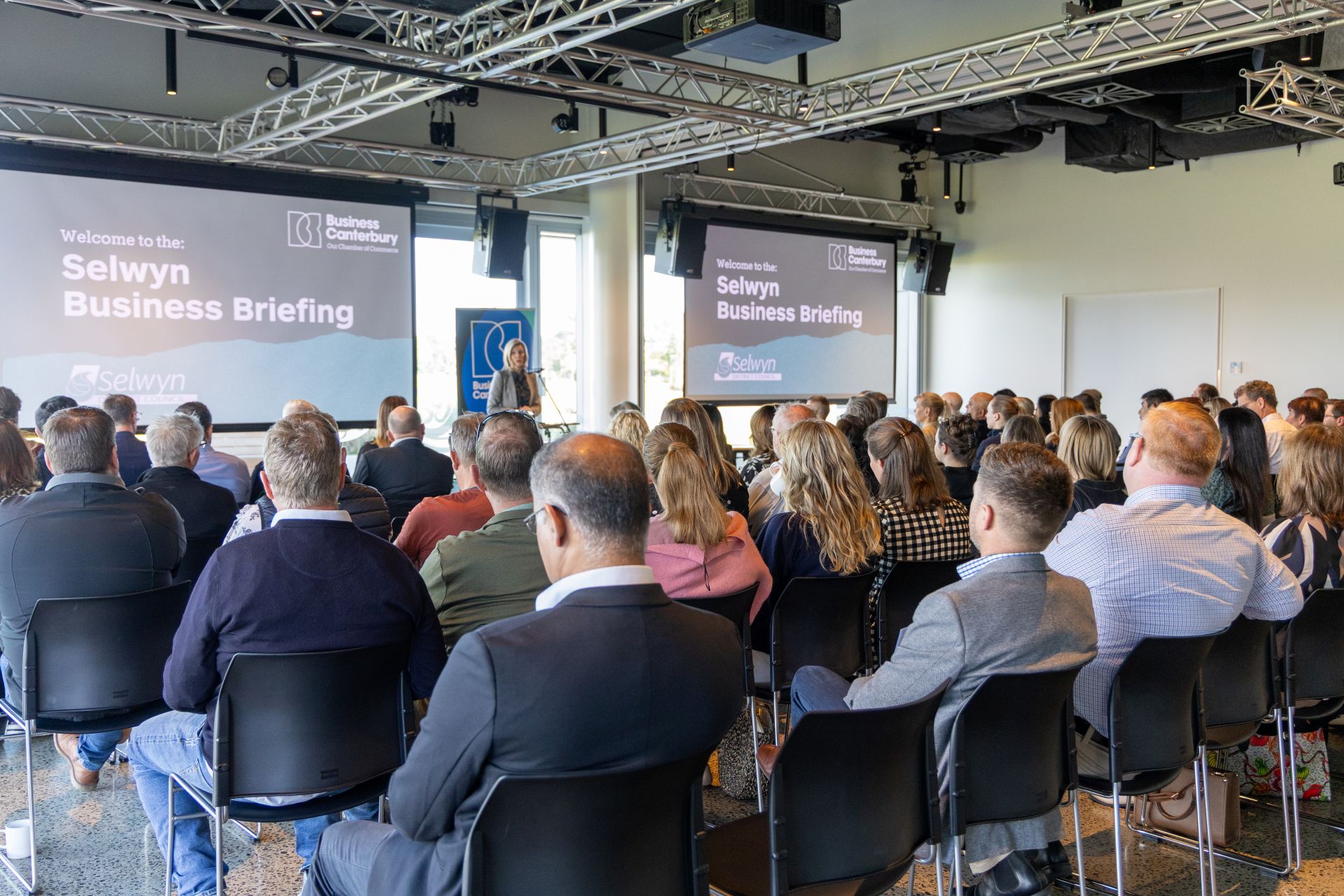
It was a full house on 16 April with more than 100 Selwyn business owners gathered at Te Ara Ātea in Rolleston for the Selwyn Business Briefing, hosted by Business Canterbury in partnership with Selwyn District Council.
Leeann Watson, Chief Executive of Business Canterbury and MC for the event, set the tone from the outset.
"My aim today is to make sure this session is not all doom and gloom," she told the room, "because actually, we're in a pretty good position despite the current environment in the Middle East."
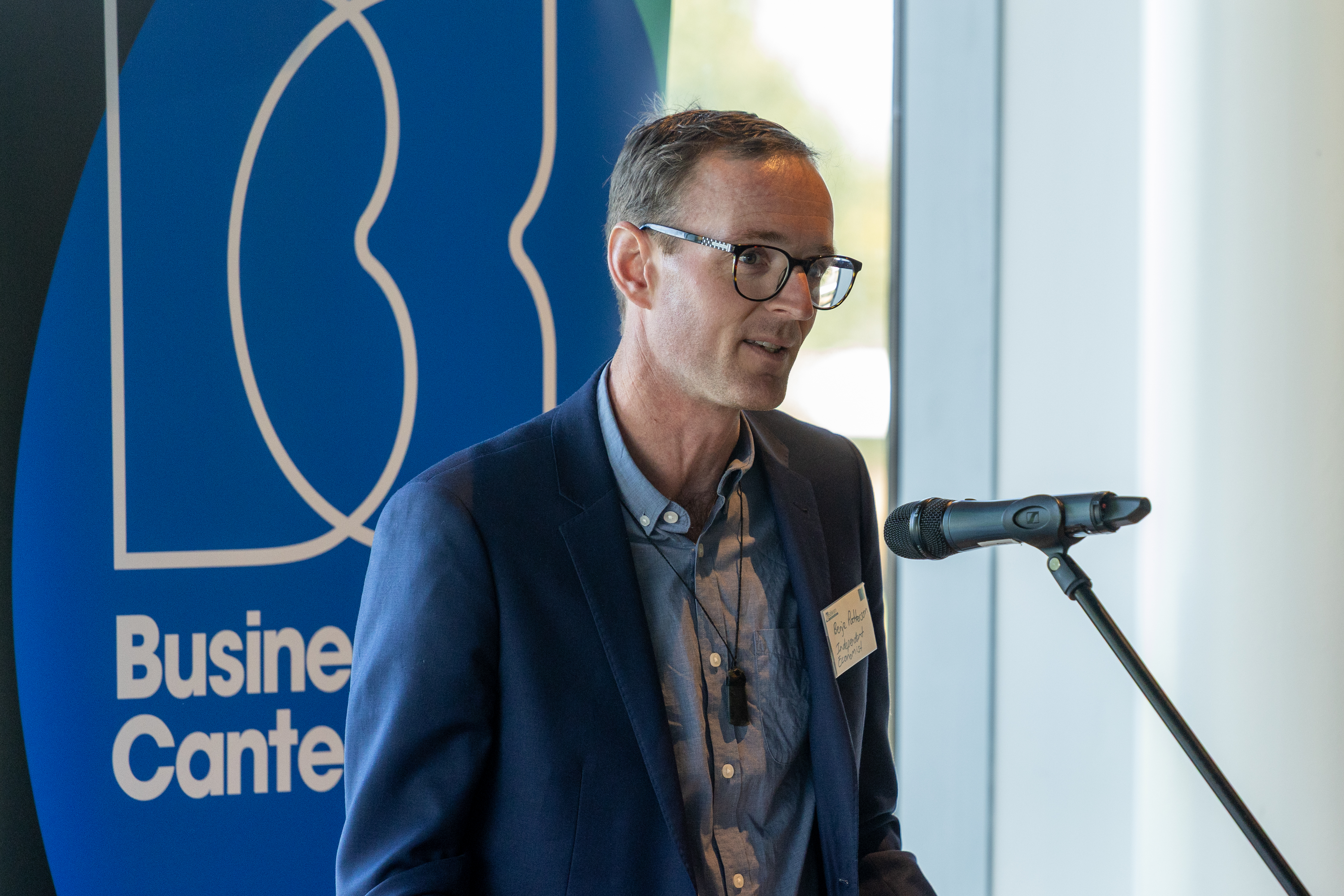
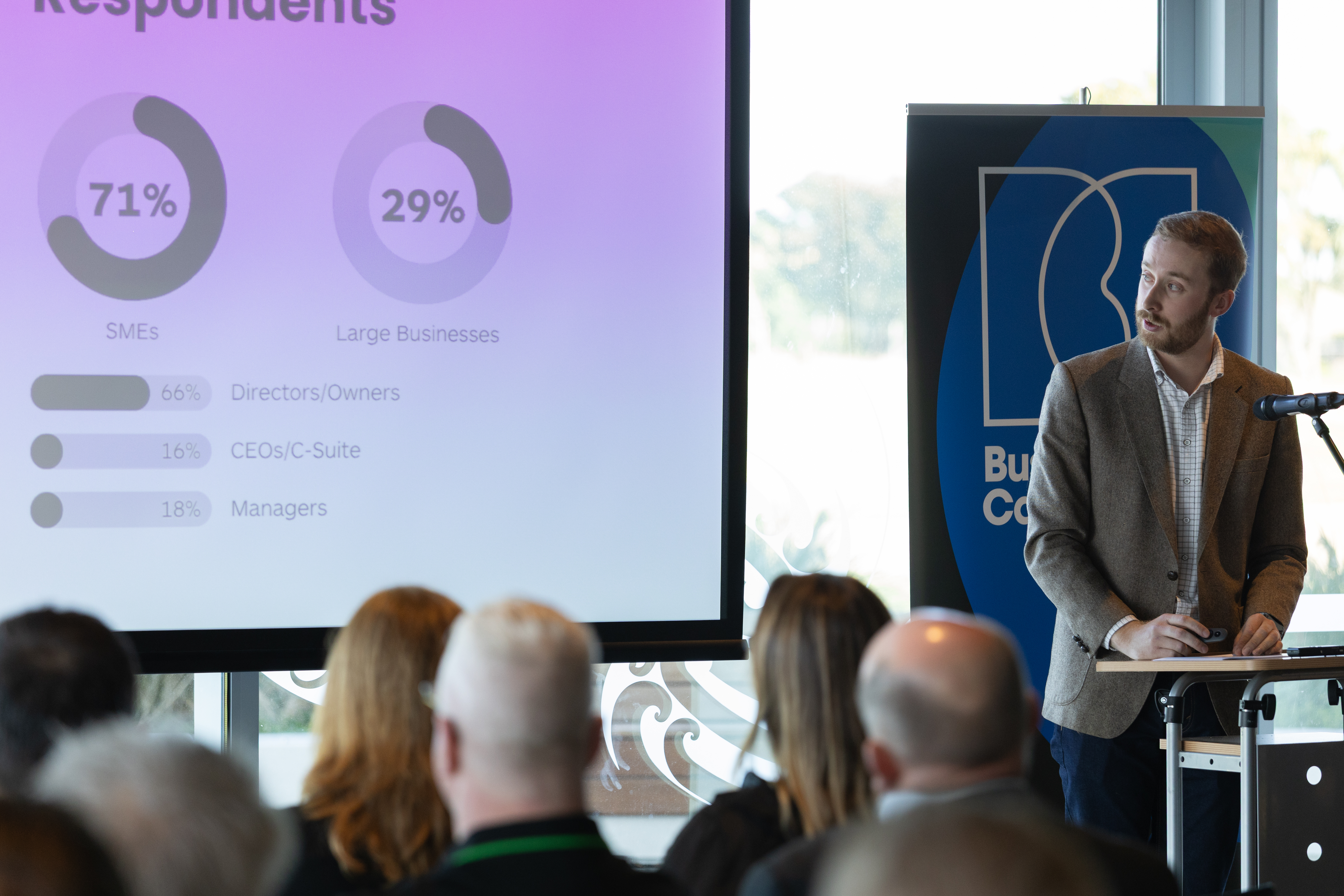
The session brought together regional economist Benje Patterson and Business Canterbury's Head of Strategy and Advocacy, Tait Dench, to make sense of the economic turbulence flowing from the Middle East conflict, and what it means for local businesses.
The message was clear: Selwyn isn't immune, but it's better placed than most, and the local economy has plenty working in its favour.
Patterson opened the briefing with a reality check on the macro shock currently hitting New Zealand. Diesel prices have more than doubled in the space of weeks, and the effects are flowing through supply chains into the cost of goods across virtually every sector. The exposure varies by industry, but no business is fully insulated.
The pressure is already showing up in the data. A Business Canterbury member survey conducted since the crisis began found around 18% of Canterbury businesses reporting major or critical strain, including restructures and layoffs. The majority, however, are holding - 63% reported the impact as manageable, and a further 19% said they'd felt no impact at all.
Tait Dench flagged that the concern goes beyond the pump price. "Fuel prices have escalated by about 100%," he said. "But there are also huge supply chain issues - including suppliers putting prices up and rationing. Businesses are starting to stockpile, which is something we saw during COVID and which created quite a long-term economic effect."
Dench also noted that the International Monetary Fund had just projected these conditions to persist through 2026 and into next year - a reminder this likely isn't a short, sharp disruption that will resolve in weeks.
If there's a silver lining, it's the strength of Selwyn's local economy.
"The starting position for Selwyn was incredibly strong as we entered into this situation," said Patterson. "Really strong GDP growth, sharp growth in the number of businesses, consumer spending rising. The labour market is functioning pretty well."
Building consents have risen sharply - almost 1,900 in the 12 months to February, up from around 1,400 the year before. Each consent represents a household arriving, adding to local demand and workforce capacity.
The agricultural sector is also performing strongly, with dairy payouts close to record levels. Fonterra's sale of its consumer brands business has returned more than $3 billion to shareholders nationally with Patterson estimating Selwyn farmers receiving around $150m.
According to data presented at the briefing, Canterbury's GDP grew 0.1% while the national average fell 0.9%. New business registrations are up 2.4% - double the national rate.
Business Canterbury's February survey, taken before the crisis escalated, found 76% of Canterbury businesses expecting stronger economic performance in the year ahead and 81% confident in their ability to handle disruption.
Watson concurred. "Canterbury, and in particular Selwyn, is coming into what is a tricky situation from a really high-performing local economy. That's a really positive starting point for us. While there will be some impacts, the fact that we've got a really strong base to start with will position us really well for the future."
Patterson's practical advice centred on pricing transparency. With inflation well outside the Reserve Bank's target band, he urged businesses to separate fuel surcharges from general price increases - itemise them, state the basis clearly, and remove them when prices normalise.
"Be as transparent as you possibly can," he said. "It'll pay dividends in the long run. Your customers will reputationally respect you. The most important thing is to maintain a good relationship over a long time."
The logic is partly about trust, partly about interest rates. If businesses handle price pass-through in a targeted, temporary way, the Reserve Bank is less likely to see inflation becoming entrenched - and less likely to lift rates as sharply as it did during the last cycle.
Selwyn businesses have long had a reputation for something of an optimism bias - a tendency to see the glass half full, even in tough times.
"We see that consistently in the data," said Dench. "When we look at other districts such as Wellington, Auckland, and we find much lower optimism compared to Selwyn.”
“It’s just part of our psyche. People just ‘get it done’. Ultimately we are a resilient, diverse business community, so we might be able to weather things a bit better than others."
That optimism is an asset, said Watson, as well as a responsibility.
"Being optimistic and bold and courageous in our decision-making has huge benefits," she said, "so we have a responsibility to tell a positive story. That doesn't mean we shy away from the challenging conversations - but it means we put things in perspective."
When asked about Selwyn's biggest long-term opportunities, all three panellists pointed to food and fibre - particularly value-add manufacturing and supply chain development tied to the district's primary sector strengths.
"Where you've got innovation or technology, the environment - plenty of land, good water - and lifestyle, and you've got those three things together, that is a huge competitive advantage."
For Selwyn, building on that advantage is the next step.