Practical Advice for Uncertain Times: Inside the Selwyn Business Forum
14 July 2026
14 July 2026
There's no sugar-coating it — costs are up, margins are tighter, and there's no single fix on the horizon. But if the mood at the Selwyn Business Forum is anything to go by, local business owners aren't waiting for conditions to improve. They're finding practical ways forward, and they're doing it together.
That was the premise of the recent Selwyn Business Forum, held at Lincoln University's Waimarie Building on June 30. A half-day workshop bringing together 100 business owners, industry leaders and support organisations, the Forum was designed to deliver practical support and actionable insights for Selwyn businesses navigating today's challenging economic environment — prioritising connection and resilience for the district's business community and beyond.
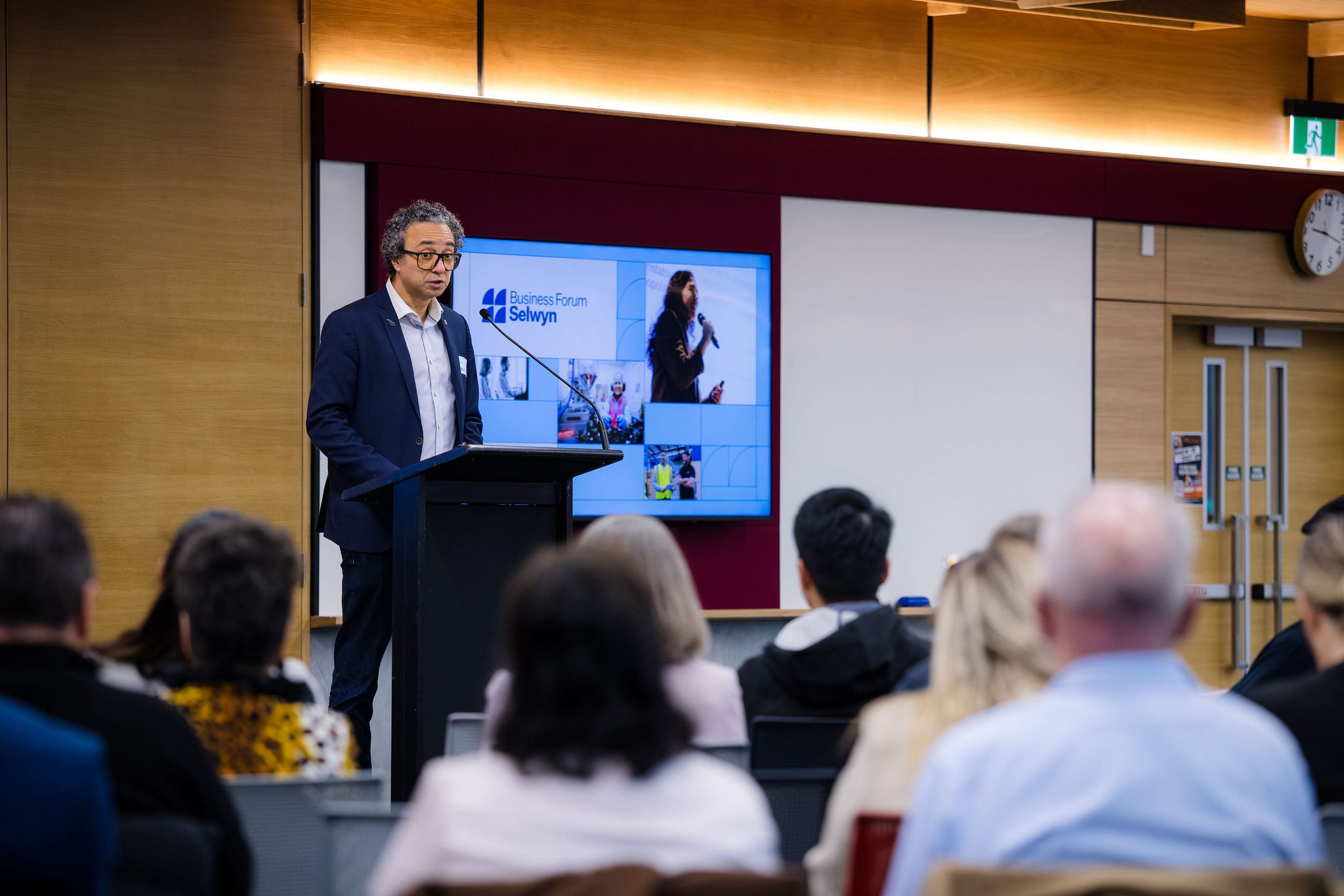
MC for the day was Karim Sabet, a local Selwyn resident and connector passionate about supporting the business community, who introduced the speakers and kept the morning moving with a mix of humour and practical questioning. Three sessions followed, each built around a different pressure point business owners are living with right now: costs and technology, workforce, and where to actually go for help. The day closed with a purposeful departure from strategy, featuring a keynote on resilience and how to keep a business steady when conditions get tough.
The first session put three very different businesses on stage and asked them each the same two questions: what's your biggest cost pressure right now, and what are you actually doing about it?
First up was Nick Murney, founder and managing director of Pure Oil NZ — the Selwyn-based company behind supermarket brand The Good Oil. Pure Oil's biggest cost pressure is freight, tied directly to fuel costs. The answer for them so far has been to absorb what the business can and pass on what it must.
The company has recently added its own refinery in Nelson, bringing more of the supply chain in-house, but they're also relying on strong relationships to manage those tricky conversations.
"If you've got longstanding customers, you should have a good relationship with them,” says Murney. “We've got larger B2B customers, and they know the market — so you stay close, keep talking to them, and when the market comes off…you've got to make sure you're passing on relief pretty promptly, or you're at risk of losing customers."
And even in tough times, it's not all downside, says Murney: rising costs for competitors have opened the door to new customers willing to shop around.
"There's also opportunity in the way-up markets too," Murney says. "You've got to be an optimist to think this way, but the opportunities are there to go and win business."
Tom Lawson is founder and CEO of G&T Catering, based at Larcomb Vineyard in Rolleston. Now twelve years into a business that ranges from small morning teas to larger events, he says that cost pressure in the food industry is acute, coming from both rising freight and primary production costs.
G&T's answer? Communication. When the price of a pie sold into school canteens went up 50 cents earlier this year, G&T had no choice but to pass on the increase, and be up front about it.
"Transparency is key,” Lawson says. “Being completely transparent with the school means they can have the conversations they have to, with parents and students."
Elsewhere, it's about margin gained in small increments: trimming an ingredient here, tightening a process there.
"Sometimes it's about rationalising — if we can save two percent on a dish by using two percent less butter, let's do that. But sometimes that two percent makes all the difference," Lawson says.
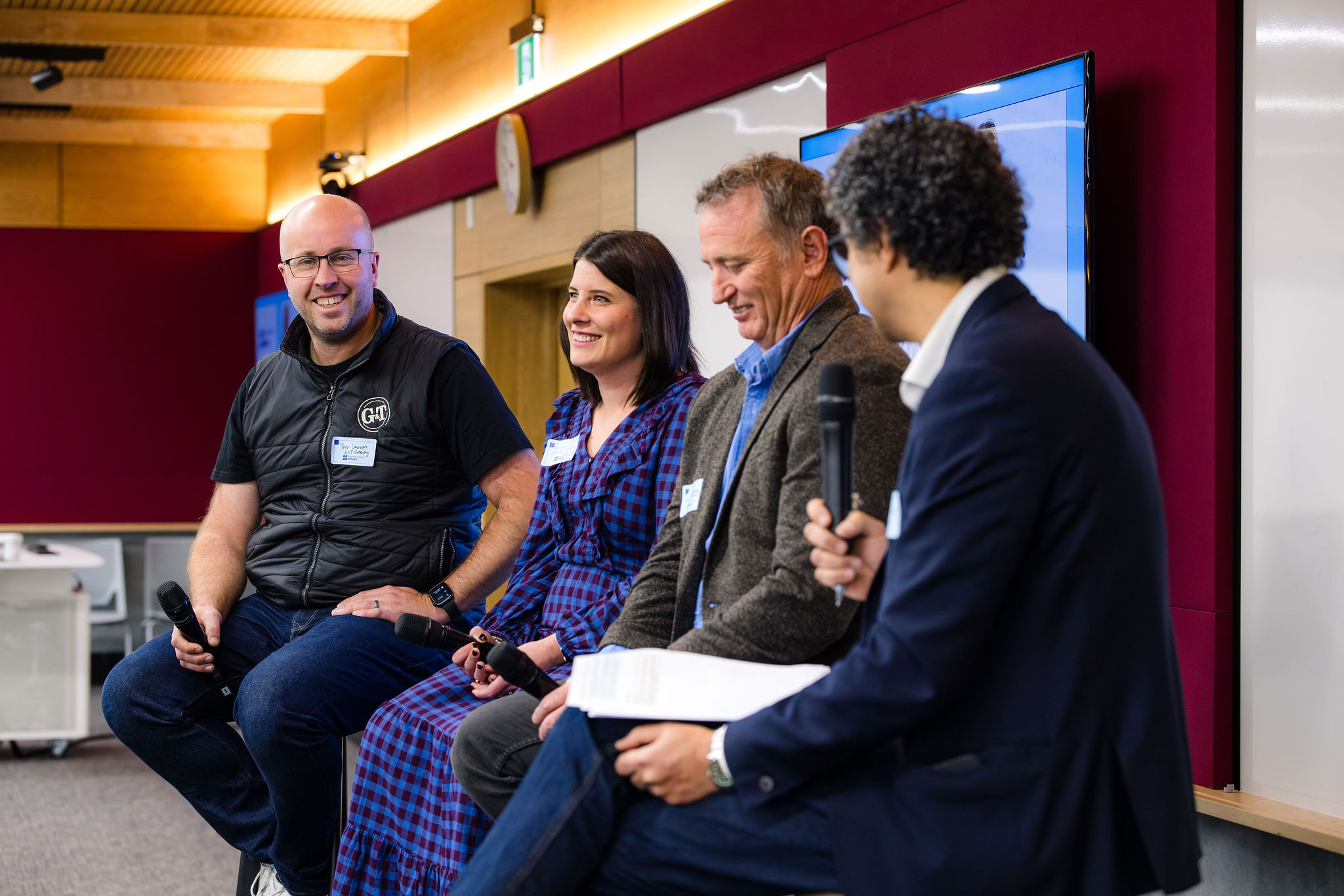
For Contented co-founder Hannah Hardy-Jones, the third speaker of the day, the biggest cost isn't freight or ingredients — it's people.
Running an AI company means competing globally for a narrow pool of talent — engineers who can offer more than purely technical expertise.
"As an AI company, we look for the absolute best people in the world," says Hardy-Jones. "We need really competent engineers who also have a human-centred base — people who love solving human problems, rather than just people who are excited about AI. It's a niche type of people. That's our biggest cost."
Those types are rare, so Contented's own answer has been to stay deliberately lean rather than over-hire: the team served 350 companies worldwide with just three people until December, and has only now grown to eighteen.
That's impressive growth without a surge in headcount — a scale of business, Hardy-Jones notes, that would likely have required several dozen people just a few years ago.
For those looking to streamline operations with AI technology, Hardy-Jones warned attendees of the 'AI for its own sake' trap, advising instead that business owners first map their specific pain points and identify the repetitive, non-human tasks that are slowing them down — then look for the tools to solve those specific problems.
Early technology investments paying off was another theme of the day: a CRM system, adopted around four years ago, has let Pure Oil grow sales by close to 50 percent without adding a single salesperson. Similarly, Function Tracker — a system to replace manual spreadsheets for things like staffing and invoicing — has done similar things for G&T.
Murney says that, at Pure Oil, AI is already reshaping its research work: what used to take eight hours searching through Google now takes fifteen minutes. That's changing the shape of entire roles, not just speeding up existing ones. Work the business would once have handed to an outside consultant can now be taken on in-house.
That's radically shifted hiring habits at Pure Oil, Murney says — the days of the narrow specialist are giving way to workers who are flexible, adaptable and able to respond to whatever challenge comes their way next.
The Q&A also touched on a harder edge to the AI conversation, with one attendee raising his experience of job-hunting in a market where AI tools now sit on both sides of the hiring process — used by applicants to polish their applications, and, it's suspected, by employers to screen them.
That balance — using technology without losing sight of the people affected by it — became a key session takeaway. Asked for parting advice, the panel's answer wasn't any particular tool or tactic, rather, it was a reminder to stay conscious of what these powerful new technologies and systems might mean for the people using them.
"It's really about not losing sight of the fact that there are people and feelings involved," Hardy-Jones says.
"Even if you're coming from the perspective of 'this is going to improve everything for the business,' someone might be going home thinking, 'what does this mean for my role?'"
"That human side can be forgotten, especially by business owners making decisions for the business and trying to keep that business afloat."
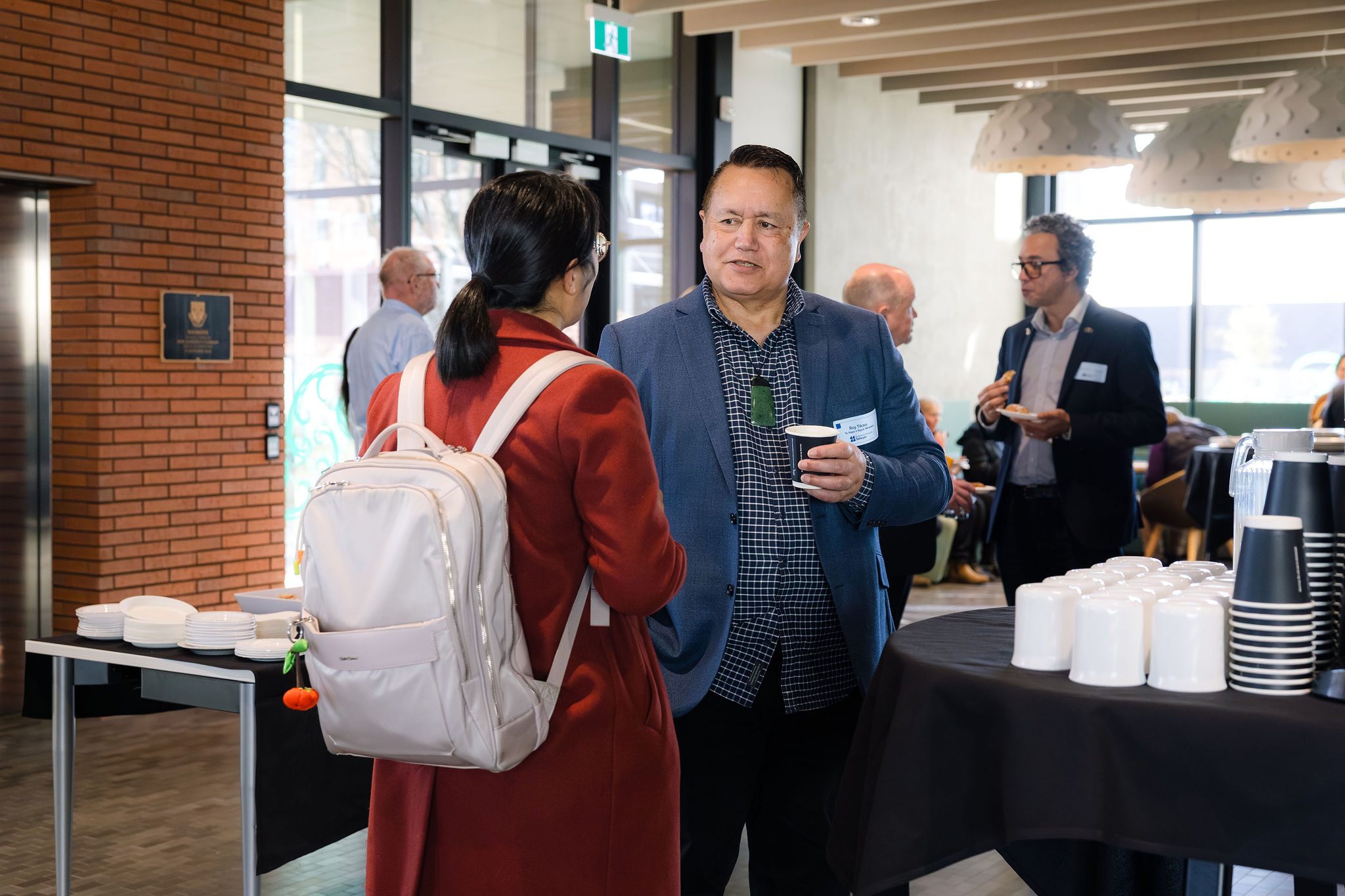
If the first session was about doing more with less, the second tackled a harder problem: finding and keeping the right people in a labour market that isn't behaving the way it used to.
Amanda Nicolle, from the Ministry of Social Development, opened with an appeal to look beyond MSD's traditional image of 'social safety net' and instead see it as a genuine workforce partner for business.
Her pitch? The 38,000 people on MSD's books with tertiary degrees are a qualified, work-ready talent pool that the labour market is overlooking.
To that end, MSD has built a suite of free tools to help connect businesses to this untapped talent, including the Digital Passport programme which provides digital literacy courses for job seekers, as well as free LinkedIn Learning access for professionals navigating a career change.
"Technology is the new work boots," says Nicolle. "You have to have digital skills to participate in the job market now. Even entry-level jobs aren't 'entry-level' anymore. If you work in a service station, it's not just about pumping gas anymore. It's about inventory management and understanding all the different technology that's now embedded in that business."
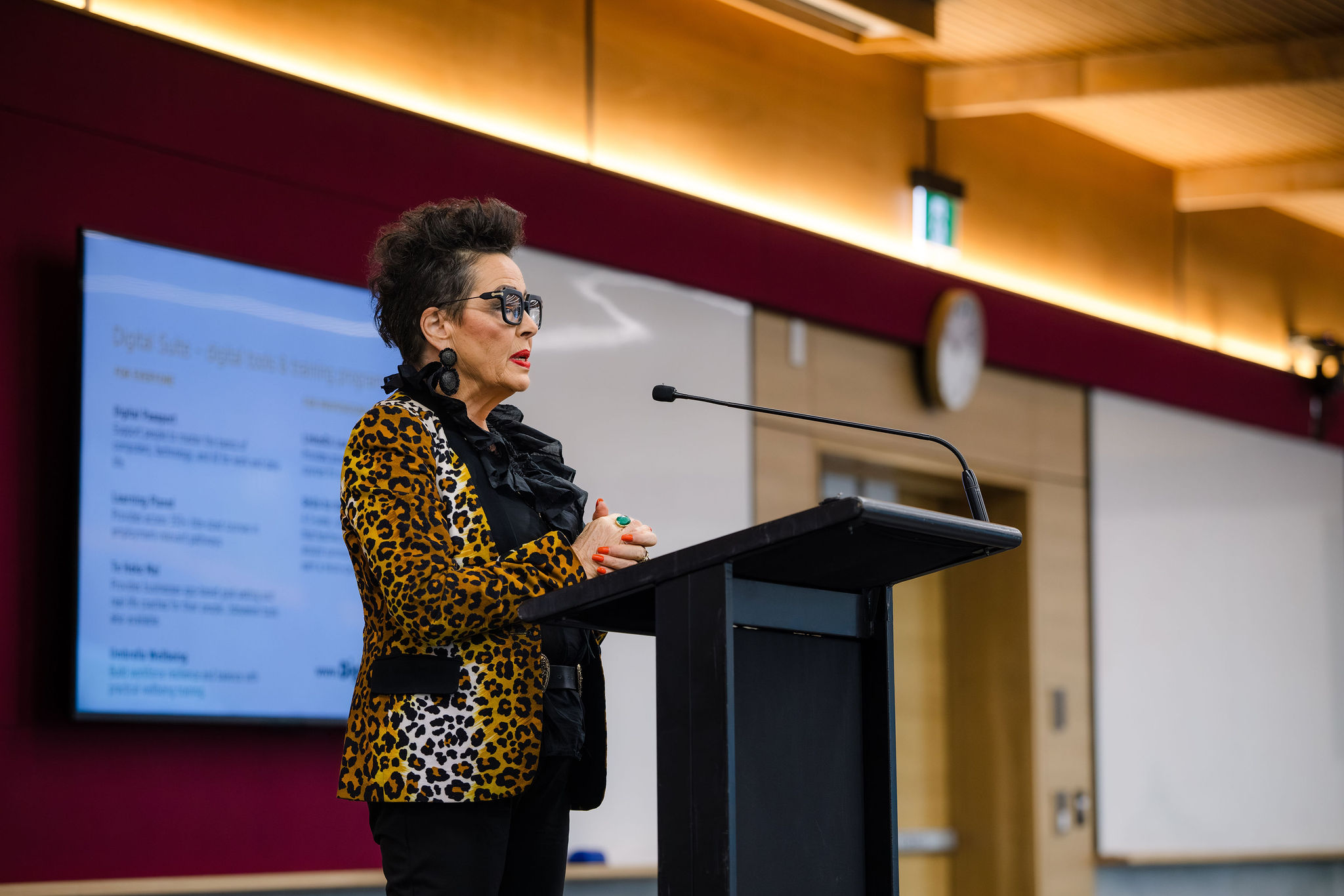
The wider MSD toolkit also includes Te Heke Mai, a mentoring platform that gives employees one-on-one coaching, aimed at businesses without the resource to support new starters and apprentices themselves, workplace wellbeing and psychological services provider Umbrella Wellbeing, and Learning Planet, a video-based training library with more than 300 programmes covering everything from technical skills to confidence-building.
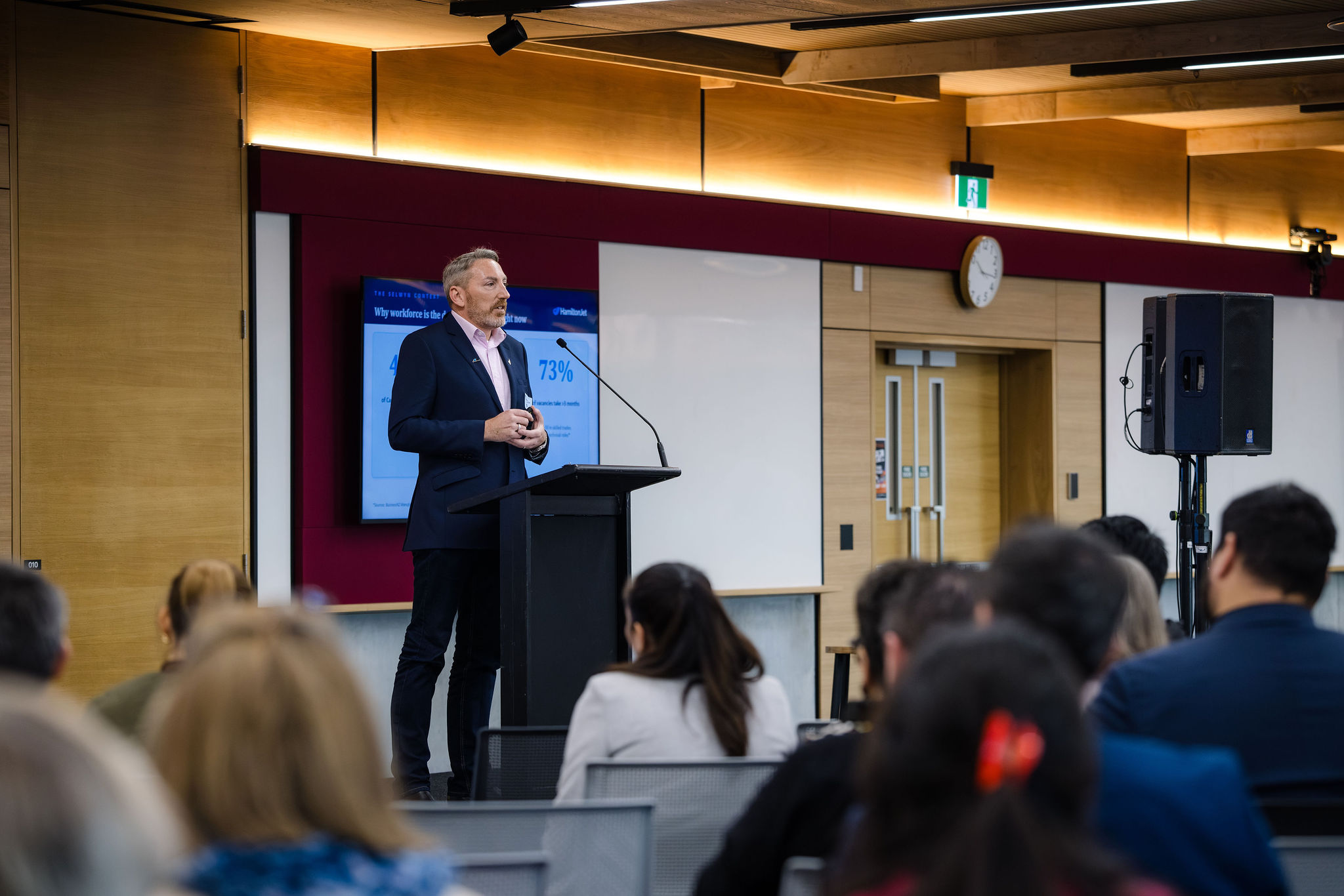
Attracting and retaining the right people is just as pressing on the factory floor as it is anywhere else in the labour market, says Rob McKenzie-Carroll, Chief Operating Officer at HamiltonJet. The world-famous, Christchurch-based waterjet manufacturer now employs around 450 people and exports to more than 120 countries.
McKenzie-Carroll argues that employers spend too much time chasing skills and experience, and not enough time telling applicants what kind of person actually fits their organisation. Know your company's 'why', he says, and put it in the job advert — because the right person who buys into the business matters more than a list of credentials.
That same logic carries into retention.
"People don't leave jobs, they leave poor managers," he says.
Pay, he notes, ranks near the bottom of the list of reasons people actually leave a job — poor management and a lack of purpose rank far higher, and even a counter-offer rarely fixes it long-term: research shows an employee who takes one is usually gone within eight to twelve months anyway.
The real lever, he argues, is clear career progression and genuine investment in middle managers, who can make or break a business's culture day to day.
The scale of the challenge isn't unique to HamiltonJet. McKenzie-Carroll says almost half of Canterbury manufacturers are currently struggling with skill shortages, with more than 70 percent of vacancies nationally taking longer than three months to fill. He links part of the problem to employers stepping back from apprenticeships over the past decade or more.
And the idea that a university degree is always the "responsible" choice for a school leaver? McKenzie-Carroll cites research suggesting young people who go into a trade often learn more in their first ten years on the job than a university graduate does in the same period.
HamiltonJet's own response has been to build its pipeline years in advance — engaging with schools and universities long before a vacancy opens, and taking on 15 to 20 engineering interns a year, several of whom go on to graduate roles within the business.
His advice to young people and their parents alike: get in front of employers early, well before the scramble for graduate positions begins, and be ready to communicate — technical skill alone won't get anyone through an interview.
"AI is going to change a lot of things," he says, "but you cannot build waterjets with AI. We still need people."
Ultimately, the message from the session was clear: even in an era of rapid technological change, the most critical infrastructure a business can invest in is its people.
Beyond the bigger-picture challenges of culture and recruitment lies the day-to-day reality of running a business in an unpredictable economy. For those navigating that grind, having a strategic and supportive partner is often the difference between scaling and stalling.
Business Canterbury supports around 2,800 businesses across Canterbury and the West Coast, from brand-new startups to established exporters.
Jason MacRae, the region's Selwyn-based Business Growth Advisor, kept his session simple, reminding the audience that Business Canterbury is 'in their corner' with a variety of resources, advice and advocacy.
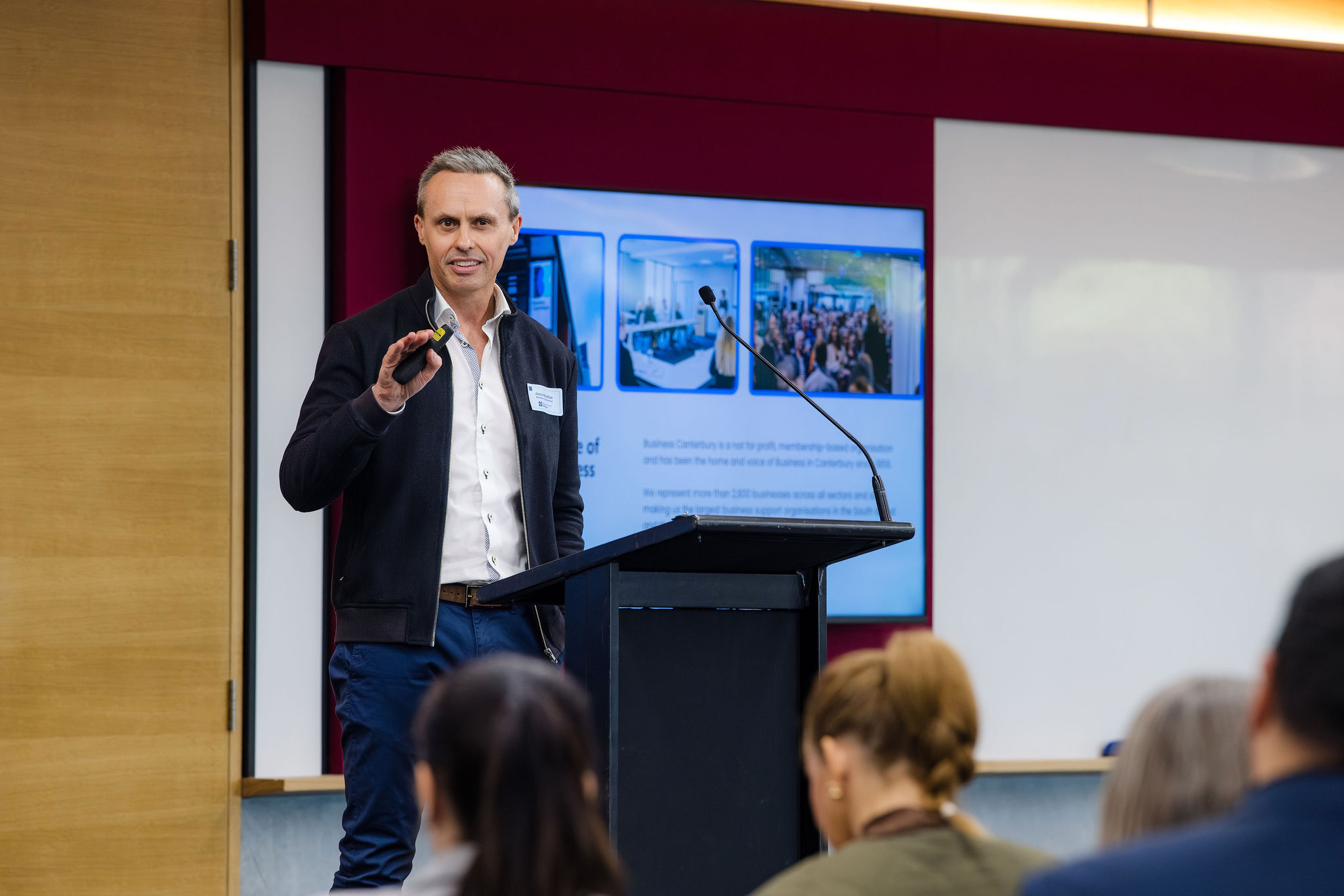
Their advocacy work focuses on removing growth barriers by representing members in policy decisions both locally and nationally, while the support side is highly hands-on — offering one-on-one advice, HR and employment law guidance, and training tailored to a business's immediate needs.
The third pillar, MacRae says, is simply connection.
"Business can be lonely and there's probably more of it in Selwyn than in some of the other areas," he says. "We've got a lot of work-from-home businesses here, so often that isolation is exacerbated because you're not as connected."
If that sounds familiar, MacRae suggests reaching out: "One of the things any business can tap into through Business Canterbury is a one-on-one session with an advisor to work out a roadmap and understand the support options specific to you."
"The best place to start is a catch-up. Let's hear about your business, where you're at, and get a plan in place to give you the connections you need to get where you want to go."
MacRae also recommended the free business continuity planning workshops running across the region through July and August, backed by the government-funded Regional Business Partner Programme — three-hour sessions, designed to get a practical plan in place before disruption hits.
To close out the session, Luciana Schio, from Selwyn District Council's community and economic development team, offered a practical walkthrough of the Selwyn Funding Finder — a free online tool the Council offers, built on the GrantGuru platform, that helps businesses, community groups and individuals track down external funding opportunities matched to what they do.
Once signed up, businesses receive alerts as new grants become available, can build a shortlist of options worth pursuing, and get reminders as application deadlines approach.
Her advice for anyone applying: be strategic about which grants genuinely align with where your business is heading, get a second set of eyes on any application before it's submitted, and don't underestimate the ongoing reporting commitment that comes with accepting funding.
By taking the time to curate the right opportunities, businesses avoid the trap of administrative burnout and ensure that the funding — and the effort required to secure and manage it — is actually moving the needle on their long-term growth.
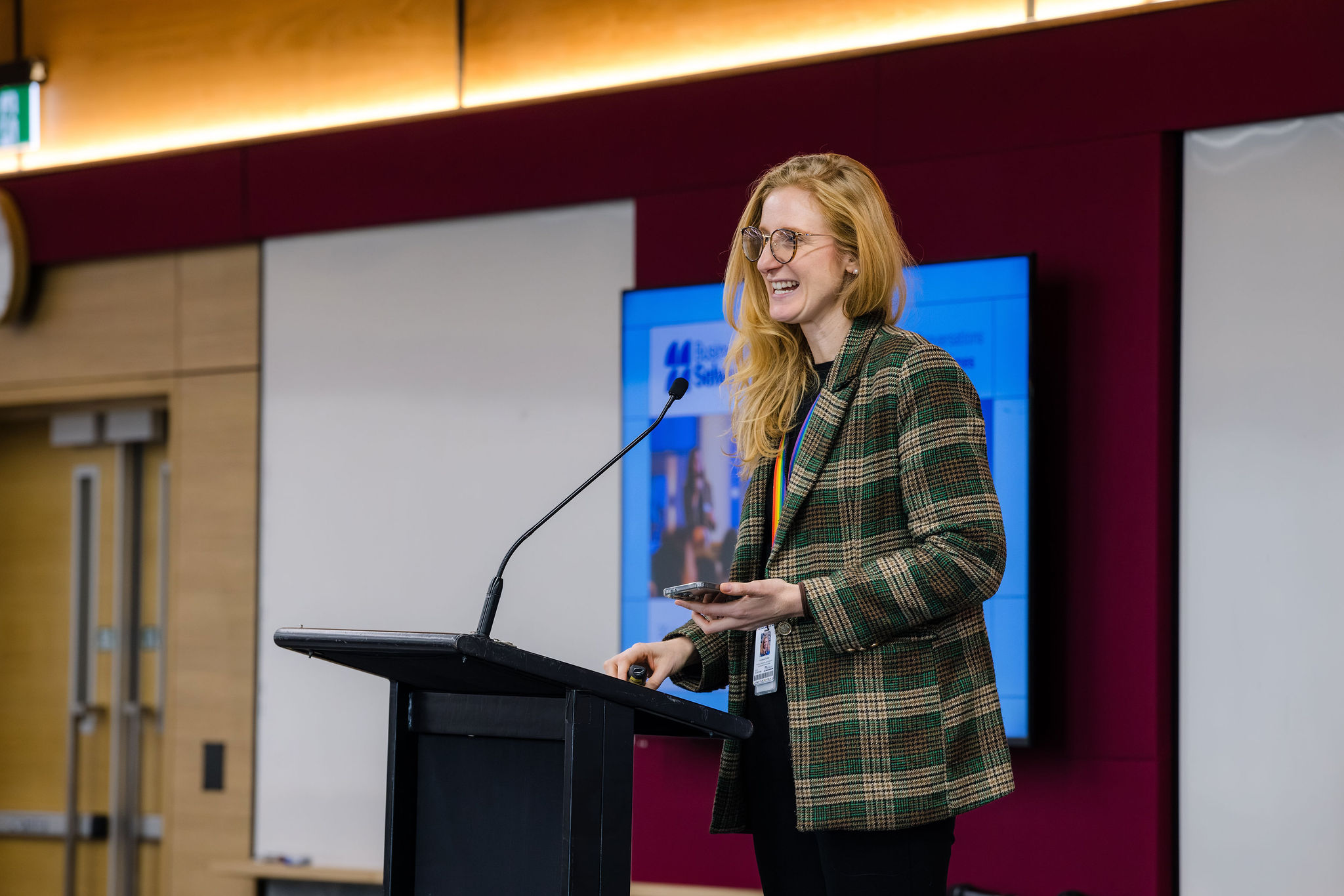
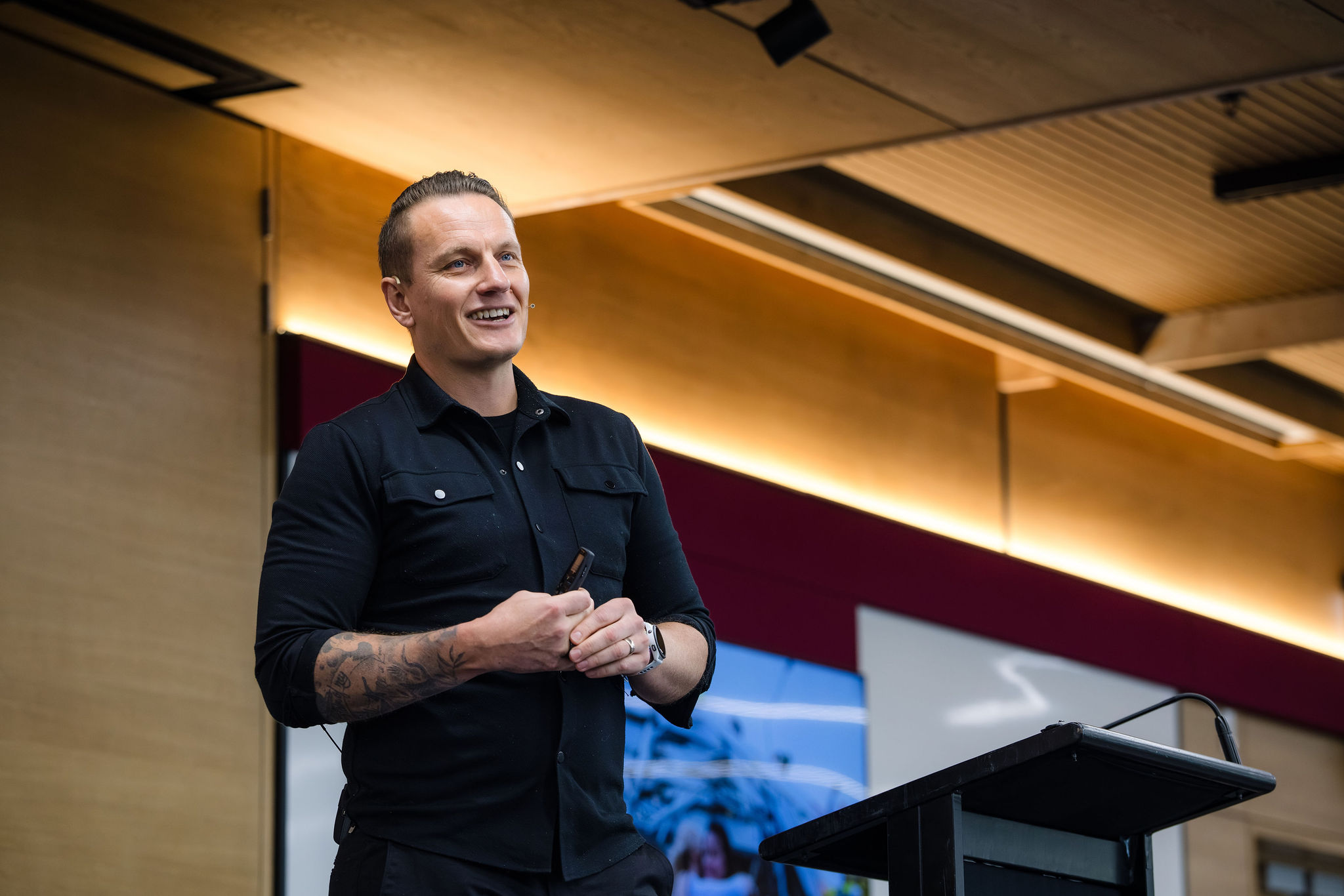
The final session of the day set the spreadsheets aside entirely, turning instead to resilience. Matty Lovell didn't speak on business theory; he spoke on what it actually takes to keep going when the pressure comes on. Lovell heads O-Studio, a wellness franchising company focused on improving lives through innovative approaches to health and performance — including a studio in Rolleston.
At 25, Lovell was living an ordinary life in Christchurch — an exciting job at a radio station, a band, a girlfriend, a good group of friends — when, on 22 February 2011, he found himself on the seventh floor of a building on Kilmore Street as the Christchurch earthquake hit.
What followed in the hours after was, in his words, pandemonium. Lovell didn't stay on the sidelines. He spent that day in the central city helping however he could, alongside strangers doing the same, in an event that reshaped the city and Lovell himself.
Then, six months later, things changed for Lovell again. Attempting a backflip, he landed awkwardly and broke both his kneecaps. The prognosis was grim: he'd be off his feet for four to six months, and he'd likely never run again. It was devastating news for the active Lovell.
The injury was a defining blow, but the real crisis was the silence that followed. Confined to a wheelchair, Lovell had to reconcile the person he was with the limitations he now faced. The switch didn't happen overnight, but it was born from a simple, intense realisation: he could either let the chair define his reality, or he could start treating his recovery as a deliberate act of will. He chose the latter, choosing to own his response even when he couldn't control his circumstances.
Today, Lovell offers a simple framework for those feeling challenged: E + R = O — Event plus Response equals Outcome. The event itself, he argues, whether it's an earthquake, a rise in interest rates or a lost client, isn't something you can control.
The real variable is how you respond to it.
His advice? Keep it simple. Resilience isn't a personality trait, but a daily practice of maintenance. Look after your biggest asset — yourself — the same way you'd protect any other asset the business depends on: sleep, nutrition, exercise. Keep perspective and don't wait for the 'right' moment to act.
His point: don't wait for a crisis to decide how you'll respond — build the habits now, so they're there when you need them.
The proof? Five years, four months and five days after being told he'd never run again, Lovell himself finished the Queenstown Marathon — in under four hours.
"You can't be resilient unless it's hard,” he says. "Navigating hard things and overcoming challenges [is how] you add another layer of armour to yourself.”
Lovell acknowledges that businesses are facing no shortage of uncertainty — from fuel prices and the cost of living to international conflict — but argues that dwelling on what can't be controlled only creates anxiety.
"Stability comes from the controllable present," he says. "Focus on today. That's where your influence is."